
The Best (and Worst) Snacks for Your Child’s Teeth
As a parent, you’re already juggling a hundred decisions a day, and “is this snack okay for my kid’s teeth” probably isn’t at the top of your list until you’re standing in the pantry trying to figure out what to hand your child before soccer practice. The good news is that a few simple guidelines can help you make smarter choices without overhauling your entire kitchen.
At Metropolitan Pediatric Dentistry & Orthodontics, we know that snacking is a normal, healthy part of a growing child’s day. The goal isn’t to eliminate snacks, but to understand which ones support strong, healthy teeth and which ones make cavities more likely.
Why Snack Choice Matters for Cavities
Cavities form when the bacteria in your child’s mouth feed on sugars and starches, producing acid that wears away tooth enamel over time. The frequency and duration of sugar exposure tends to matter as much as the total amount consumed. A piece of candy eaten quickly and followed by a rinse of water may do less damage than a sports drink sipped slowly over the course of an afternoon, since the teeth spend more time bathed in sugar with the latter. That said, I’m not certain of the exact comparative risk between these scenarios, and parents should treat this as a general principle rather than a precise measurement.
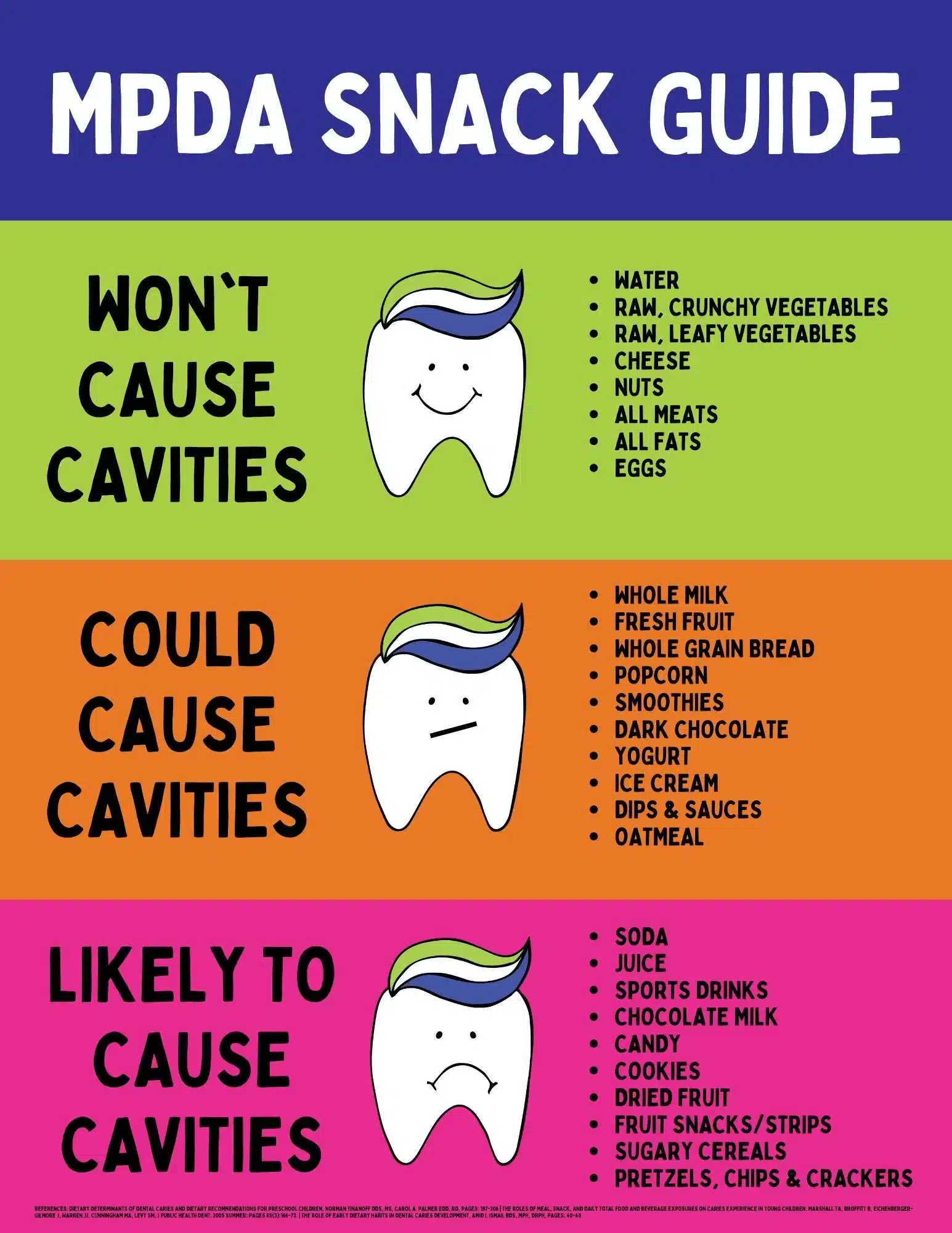
With that context in mind, here’s a breakdown of common snacks organized by how likely they are to contribute to tooth decay.
Snacks That Won’t Cause Cavities
These snacks are generally considered safe, tooth-friendly choices:
- Water
- Raw, crunchy vegetables
- Raw, leafy vegetables
- Cheese
- Nuts
- All meats
- All fats
- Eggs
These options share a few things in common: they’re low in fermentable sugars, and many (like raw vegetables and water) actively help clean the mouth or stimulate saliva production, which naturally neutralizes acid.
Snacks That Could Cause Cavities
This middle category includes foods that offer real nutritional value but come with some cavity risk, often because they contain natural sugars, starches, or a sticky texture that clings to teeth:
- Whole milk
- Fresh fruit
- Whole grain bread
- Popcorn
- Smoothies
- Dark chocolate
- Yogurt
- Ice cream
- Dips and sauces
- Oatmeal
None of these need to be avoided. They’re simply worth pairing with good habits, such as rinsing with water afterward or brushing within a reasonable window after eating.
Snacks Likely to Cause Cavities
These snacks carry the highest risk, typically because they combine high sugar content with the kind of stickiness or prolonged mouth contact that gives bacteria extra time to produce acid:
- Soda
- Juice
- Sports drinks
- Chocolate milk
- Candy
- Cookies
- Dried fruit
- Fruit snacks and strips
- Sugary cereals
- Pretzels, chips, and crackers
It’s worth noting that dried fruit, fruit snacks, and even some granola-style snacks can be just as concerning as candy, since their sticky texture allows sugar to linger on and between teeth long after the snack is finished.
Simple Habits That Make a Difference
You don’t have to eliminate every snack in the “likely to cause cavities” category to protect your child’s smile. A few habits can meaningfully reduce risk:
- Pair sugary snacks with meals rather than spacing them throughout the day, since saliva production during meals helps buffer acid.
- Offer water after sugary or acidic snacks to help rinse the mouth.
- Limit grazing on sticky or sugary snacks throughout the day, since frequency of exposure matters more than a single serving size.
- Keep up with regular brushing and flossing, and don’t skip those twice-a-year dental visits.
When to Schedule a Visit
If you’re noticing changes in your child’s teeth, or it’s simply been a while since their last cleaning, our team at Metropolitan Pediatric Dentistry & Orthodontics is here to help. Regular checkups let us catch small issues before they become bigger ones, and we’re always happy to talk through snack habits and oral hygiene routines tailored to your child’s needs.