

Wearing a retainer is one of the most important steps in protecting your investment after orthodontic treatment using braces or clear aligners like Invisalign. But a retainer only works as well as it’s maintained. Bacteria, plaque, and tartar can build up quickly on a retainer that isn’t cleaned properly, leading to bad odors, discoloration, and even oral health issues. If you’re unsure how to clean retainers, this guide breaks it all down by retainer type so you know exactly what to do.
At Metropolitan Pediatric Dentistry & Orthodontics, we work with patients wearing several different styles of retainers, including Hawley retainers, clear plastic (Essix-style) retainers, and fixed or “permanent” retainers. Each one requires a slightly different cleaning approach, so let’s walk through them one at a time and learn how to clean your retainer safely and effectively.
Why Cleaning Retainers at Home Matters
Your mouth is full of bacteria, and a retainer sits in that environment for hours every day. Without regular cleaning, plaque and tartar can build up on the surface of the appliance, and this can lead to a cloudy appearance, a persistent odor, or even gum irritation. Learning how to clean retainers at home (the right way) helps prevent these issues and extends the life of your appliance, which can be costly to replace.
How to Clean a Hawley Retainer
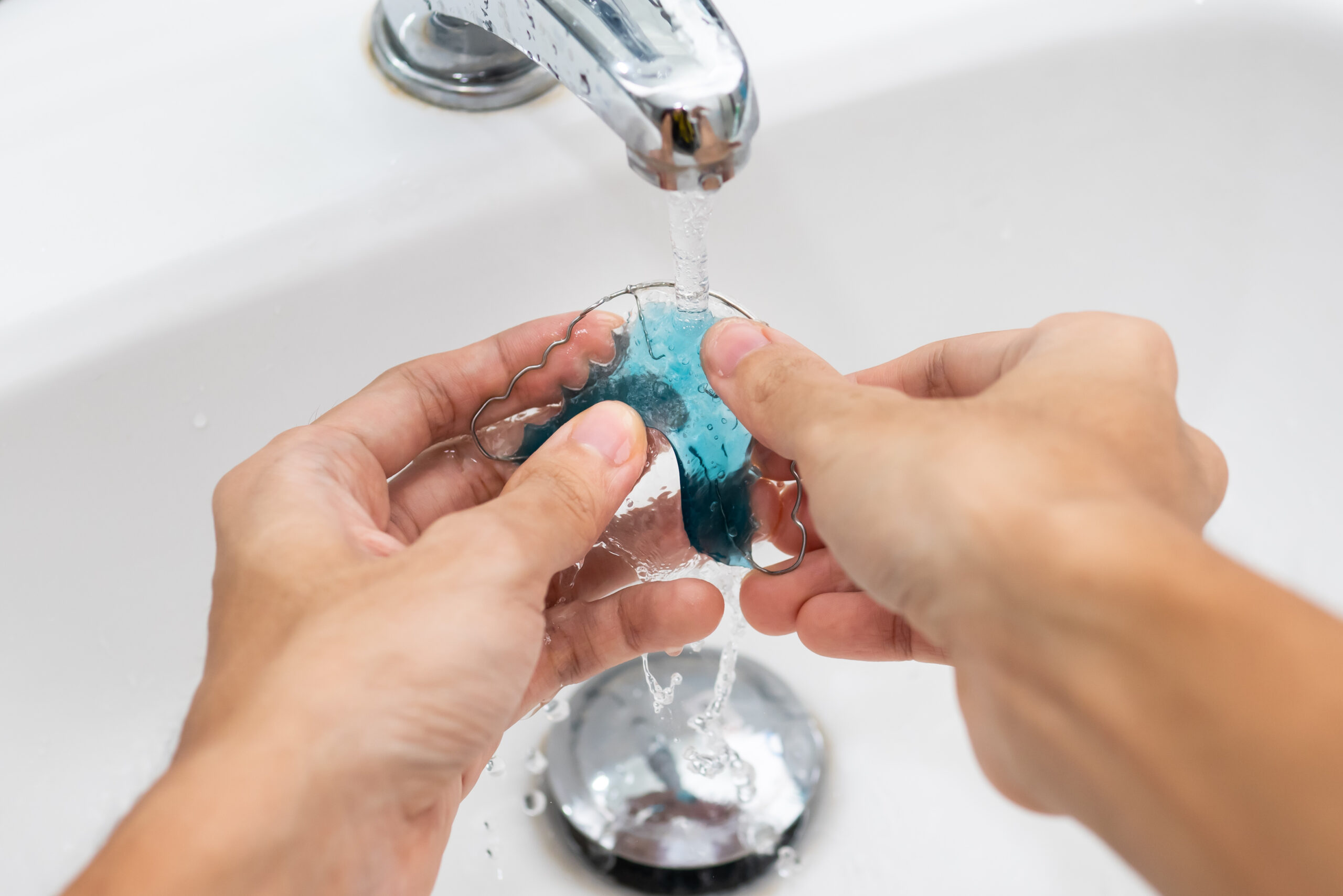
Hawley retainers are the classic wire-and-acrylic style retainers that have been used in orthodontics for decades. Because they have a hard acrylic base combined with metal wires, cleaning a retainer like this requires a gentle touch so the wires don’t bend or warp.
Daily Retainer Cleaning Steps
- Rinse the retainer under cool or room temperature water every time you remove it. Hot water can warp the acrylic, so always stick to only slightly lukewarm or cool water.
- Use a soft-bristled toothbrush (preferably a separate one from your regular toothbrush) to gently brush all surfaces of the acrylic and wire.
- Avoid toothpaste, since most toothpaste is abrasive and can create tiny scratches in the acrylic where bacteria can hide. Just use water instead!
Deeper Cleaning a Few Times a Week
For a more thorough clean, soaking is one of the most effective methods. Retainer cleaning tablets, which are widely available at pharmacies and online, are designed specifically for this purpose. Simply drop a tablet into a cup of room temperature water, place the retainer inside, and follow the soak time listed on the package, since this can vary by brand.
How to Clean Plastic Retainers (Clear Aligner-Style)
Clear plastic retainers, often referred to as Essix retainers, are popular because they’re nearly invisible. However, this same clear plastic material is more prone to visible buildup and scratching than acrylic, so knowing how to clean plastic retainers properly is especially important.
What to Avoid
Never use hot water on clear plastic retainers, as heat can warp the plastic and ruin the fit almost immediately. Skip toothpaste here as well, since the mild abrasives can cloud the clear material over time, and avoid mouthwash soaks, since the alcohol and dyes in many mouthwashes can damage the plastic or stain it.
The Best Way to Clean Clear Aligner-Style Retainers
A gentle daily brush with a soft toothbrush and room temperature water is the foundation of care. For a deeper clean, retainer cleaning tablets remain one of the easiest and most reliable options since they’re formulated to break down plaque without damaging clear plastic. If you’re searching for the best retainer cleaner for this style specifically, look for tablets or solutions labeled safe for clear or “invisible” retainers, as some products are formulated more for acrylic appliances and may be too abrasive for thinner plastic.
How to Clean Orthodontic Retainers That Are Fixed (Permanent)
Fixed retainers, sometimes called permanent retainers, are thin wires bonded to the back of the front teeth, usually the lower teeth, to keep them from shifting. Because they aren’t removable, cleaning a retainer like this requires more attention to the surrounding teeth and gumline rather than the wire itself.
Daily Fixed Retainer Maintenance
- Brush around and behind the wire carefully with a regular soft-bristled toothbrush, angling the bristles to reach both above and below the wire.
- Use a floss threader or orthodontic floss pick designed for fixed retainers to clean between each tooth where the wire is bonded. Regular floss won’t slide through on its own since the wire blocks it.
- A water flosser can be a helpful addition for flushing out food particles and plaque that build up along the wire throughout the day.
Because food and plaque can accumulate more easily around a fixed retainer, it’s worth scheduling regular cleanings with your orthodontist or dentist so they can check that the wire is still securely bonded and that no decay or gum irritation is developing underneath it.
Choosing a Retainer Cleaner
With so many products on the market, from soaking tablets to specialized retainer cleaner solutions, it’s worth keeping a few things in mind. Whatever product you choose, confirm it’s safe for your specific retainer material, whether that’s acrylic, clear plastic, or metal, since not every cleaner works for every type. Your orthodontist can also recommend specific products that work well with the materials used in your particular retainer.
When to Talk to Your Orthodontist
If your retainer develops a persistent odor, visible cracks, or a cloudy appearance that doesn’t improve with cleaning, it’s a good idea to bring it in for an evaluation. The same goes for fixed retainers that feel loose or wires that seem to be poking or shifting.
At Metropolitan Pediatric Dentistry & Orthodontics, our team is always happy to answer questions about retainer care and help you find the cleaning routine that works best for your specific appliance. A few minutes of daily care goes a long way toward keeping your smile exactly where your treatment left it. Request an appointment or contact us today with any questions!